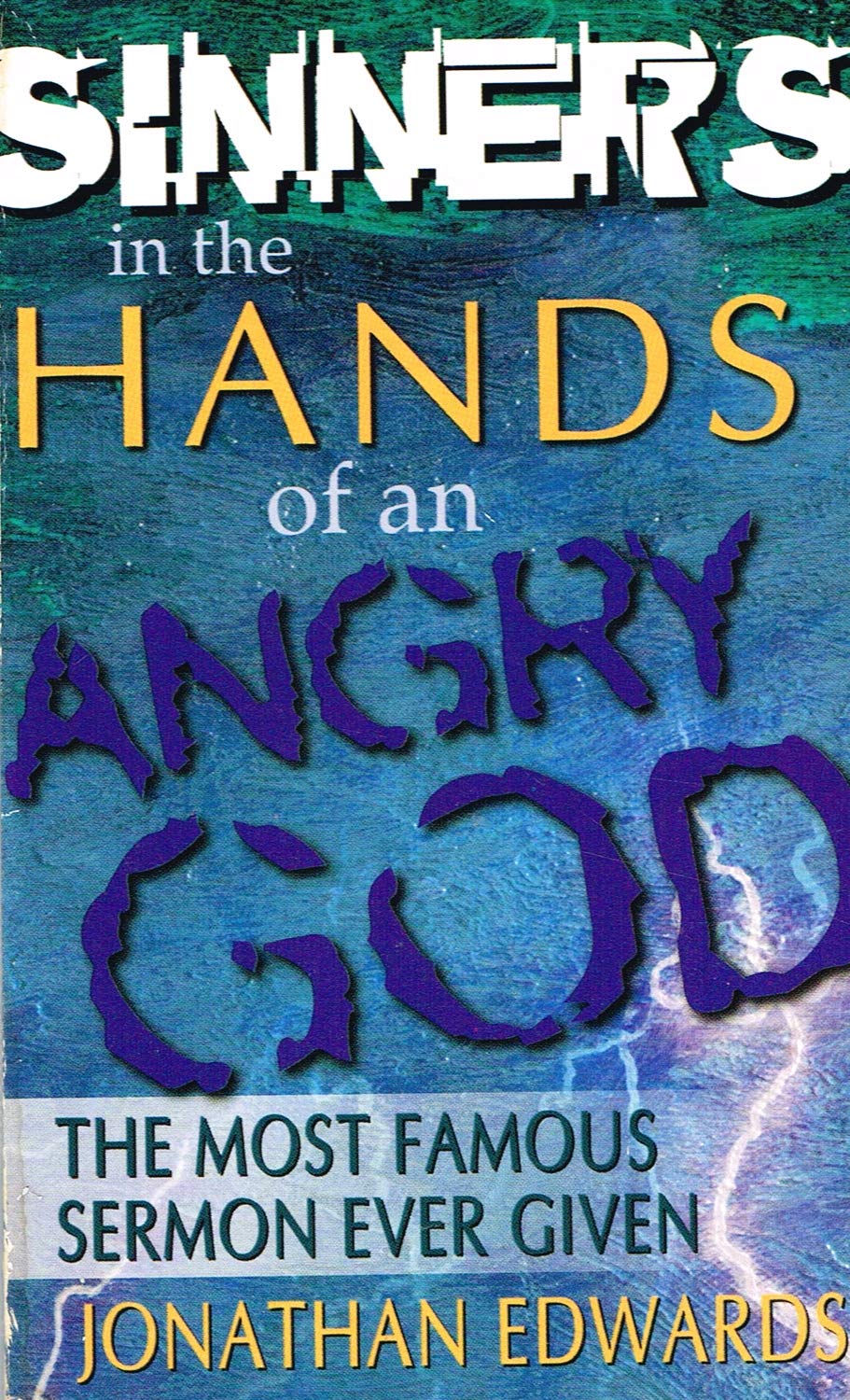
Why the Sinners in the Hands of an Angry God Holds Up
Jonathan Edwards wrote one sermon in 1741 and somehow managed to say more about the human condition than most authors do in a career. This little book earns its place on any serious shelf.
I'm a carpenter. I spend my days thinking about whether a joint is square, whether a finish will hold, whether a tool is worth the shelf space it takes up. I don't usually find myself writing about seventeenth-century Puritan theology. And yet here we are.
Someone in the office dropped a copy of Jonathan Edwards' 'Sinners in the Hands of an Angry God' on my desk and asked what I thought. My first instinct was to hand it back. My second instinct — after I'd read the first two pages standing at my bench — was to sit down and finish it. That doesn't happen often with me and books I wasn't expecting to read.
What Edwards understood, and what I think gets lost when people dismiss this sermon as a relic of fire-and-brimstone excess, is that he was doing something structural. He wasn't just yelling. He was building an argument the way you build a staircase — each step has to hold before you put weight on the next one. The famous spider-over-the-fire image isn't shock value. It's a load-bearing element. Remove it and the whole thing loses its footing.
There's a lesson in that for anyone who makes things. The best work doesn't announce itself. It just holds. Edwards' sermon has been holding for nearly three hundred years, which is a longer track record than most tools I've used and certainly longer than most books I've read. When something lasts that long without being propped up by novelty or marketing, it's worth paying attention to how it was put together.
I'm not here to tell you what to believe or whether Edwards was right about anything theological. That's between you and whatever you reckon with at the end of the day. What I can tell you is that as a piece of constructed writing — as a demonstration of what language can do when someone uses it with genuine intention and no wasted motion — this sermon is the real thing. And in my experience, the real thing is always worth your time.