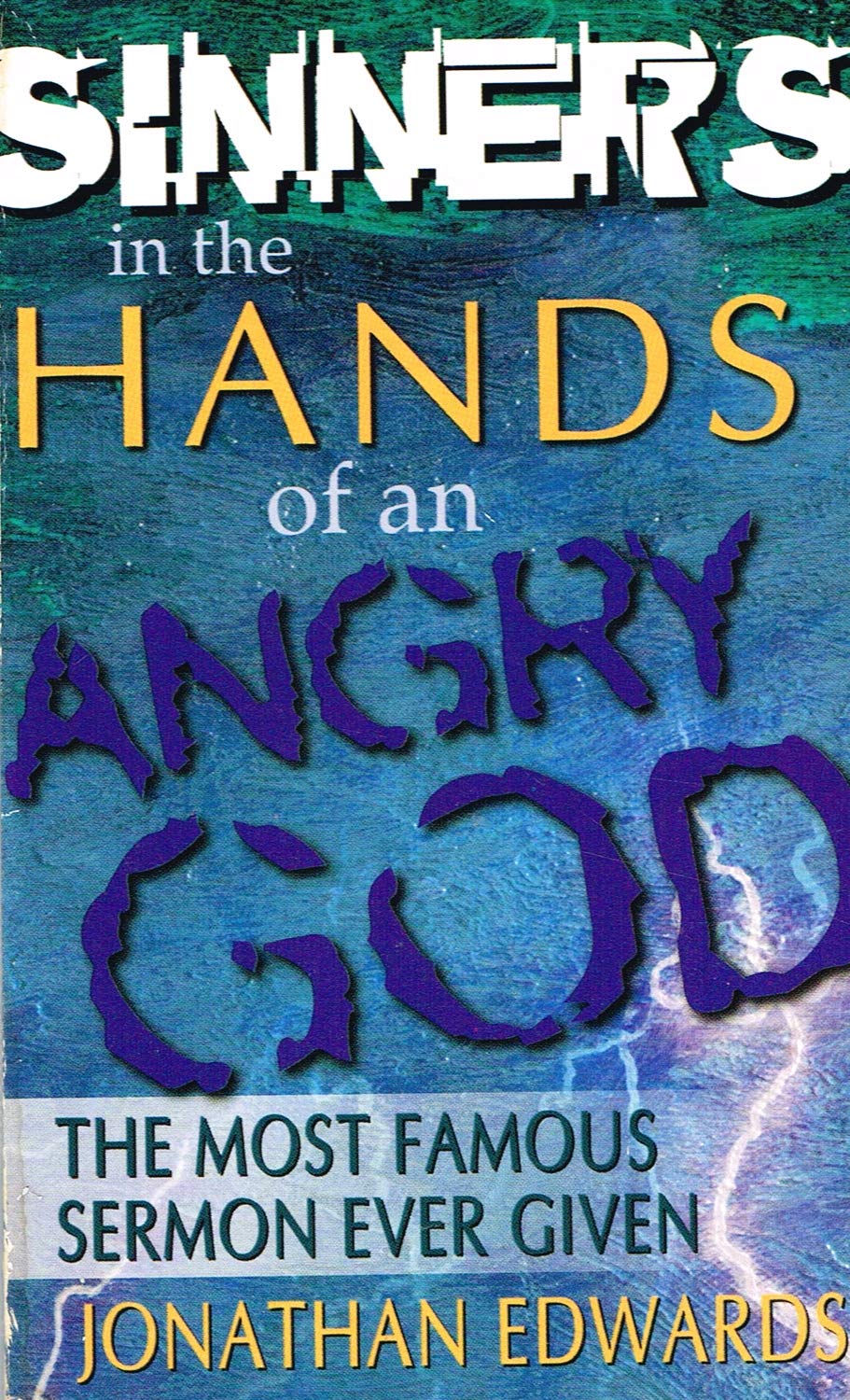
Sinners in the Hands of an Angry God
Jonathan Edwards wrote one sermon in 1741 and somehow managed to say more about the human condition than most authors do in a career. This little book earns its place on any serious shelf.

TL;DR Summary
Pros
- Prose so precise and purposeful it reads like it was measured twice and cut once
- Imagery that sticks with you long after you've put it down — Edwards' spider over the fire is genuinely unforgettable
- No wasted words, no filler, no padding — a masterclass in economy of language
- Clean, readable edition that lets the text breathe without unnecessary editorial clutter
- Historically significant and still viscerally effective nearly three centuries later
- Affordable price makes it an easy addition to any serious reading list
Cons
- It's very short — you'll finish it in one sitting and wish there were more
- The small-format booklet feel won't appeal to readers who want a more substantial physical object
View Product
Check availability and current pricing
Affiliate link — we may earn a commission at no additional cost to you. Price shown ($5.99) reflects what we paid at time of purchase and may differ from current seller pricing.
Extended Observations
Jonathan Edwards wrote one sermon in 1741 and somehow managed to say more about the human condition than most authors do in a career. This little book earns its place on any serious shelf.
I'll be upfront: I review hand tools for a living, and somebody handed me a copy of Jonathan Edwards' most famous sermon to evaluate. Fair enough. I've spent thirty years judging whether a thing does what it's supposed to do, and this slim volume does exactly what it's supposed to do — with a precision that would make a well-tuned block plane jealous.
Edwards delivered 'Sinners in the Hands of an Angry God' in Enfield, Connecticut in 1741, and by all accounts the congregation was weeping before he finished. Reading it cold, off the page, nearly three centuries later, you can still feel the mechanism working. The prose is tight, the imagery is relentless — a spider dangling over a flame gets used to more rhetorical effect than most writers squeeze out of an entire novel — and there's not a wasted word in it. No filler. No marketing copy dressed up as theology. Just a man making an argument and refusing to let you look away.
What strikes me most is how little Edwards relies on spectacle. He wasn't shouting. Contemporary accounts say he read from his notes in a near-monotone. The power is entirely in the construction of the language, the way one image locks into the next like dovetail joints. That's craftsmanship. I know craftsmanship when I see it, and I respect it wherever I find it, even when it's coming from a Puritan divine trying to scare the daylights out of eighteenth-century New Englanders.
This Sword of the Lord Publishers edition is a clean, no-nonsense presentation. Small format, easy to hold, readable typeface. It doesn't clutter the text with excessive apparatus. You get the sermon, you get the words, and you're left to reckon with them yourself. That's the right call. Edwards doesn't need a lot of editorial scaffolding propping him up.
If I have any complaint — and I'm reaching here — the booklet is so short it almost feels like you blinked and it's over. But then again, so does a perfectly driven nail. Sometimes the best tools are the ones that finish the job before you've had time to think about it. This sermon has been finishing jobs on readers for nearly three hundred years. Hard to argue with that track record.
Our Verdict
Jonathan Edwards wrote one sermon in 1741 and somehow managed to say more about the human condition than most authors do in a career. This little book earns its place on any serious shelf.
Buy NowAffiliate link — we may earn a commission at no cost to you
What customers are saying
10 reviewsThis is a wonderful book that dispels the murky way Western society typically portrays church life. Because it's straightforward and brief, I bought multiple copies to distribute alongside the tract "...
As a historical document, this work has merit, though evaluating it purely as a sermon is problematic. The fear-based rhetoric transported me back to my youth in a fundamentalist setting, where such i...
This is a good book that I plan to continue reading.
A solid book.
The work is filled with scriptural citations that I found engaging. Edwards' biblical foundation is commendable, and I'd suggest it to others. I'm planning to explore additional writings by Edwards.
Discussion
0 commentsSign in to join the discussion
No comments yet. Be the first to share.