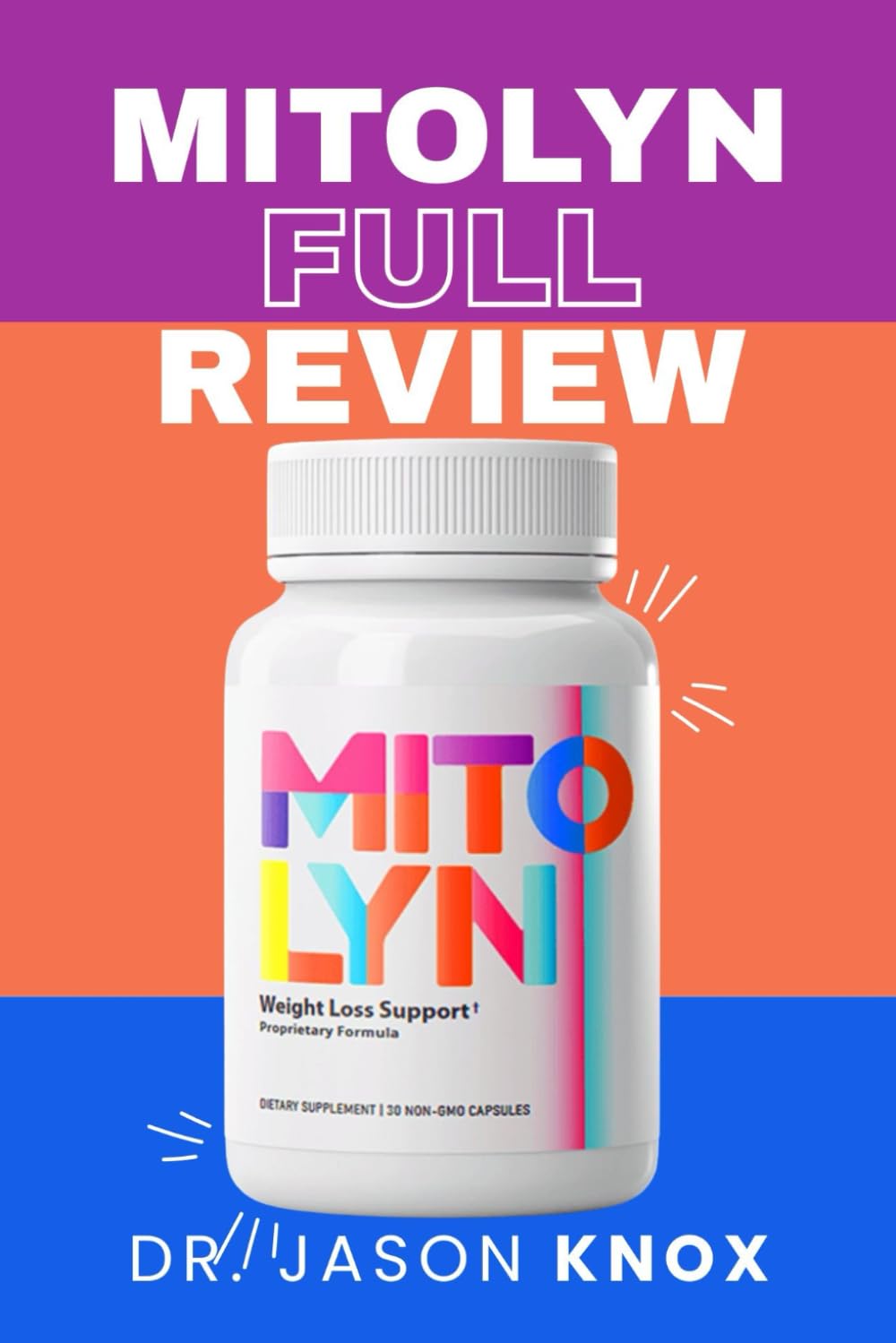
Mitolyn Weight Loss Supplement Review
A keyword-stuffed vanity publication masquerading as science, this self-published 'review' of a weight loss supplement offers no clinical rigor and plenty of red flags.

TL;DR Summary
Pros
- Physically exists as a listed product, which is the most charitable thing one can say
- May inadvertently prompt readers to research mitochondrial health through more credible sources
Cons
- No verifiable author credentials or disclosed conflicts of interest — 'Dr. Jason Knox' is presented without any institutional or professional context
- Title is pure keyword stuffing designed to capture search traffic for 'mitolyn reviews,' not to inform readers
- Relies on 'success stories' as a primary evidence pillar — anecdotal testimonials are the lowest rung of the clinical evidence hierarchy
- Uses the word 'revolutionary' to describe a supplement, which is a marketing signal, not a scientific one
- Provides no ingredient-level analysis, no dosage discussion, and no citation of peer-reviewed literature based on available product information
- Functions as a thinly veiled sales funnel for a supplement product, not an independent or critical review
View Product
Check availability and current pricing
Affiliate link — we may earn a commission at no additional cost to you. Price shown ($12.99) reflects what we paid at time of purchase and may differ from current seller pricing.
Extended Observations
A keyword-stuffed vanity publication masquerading as science, this self-published 'review' of a weight loss supplement offers no clinical rigor and plenty of red flags.
Let me be direct: what we have here is not a book in any meaningful sense. This is a self-published pamphlet — listed on Amazon under the Books category — that exists primarily to rank for the keyword 'mitolyn reviews' and funnel readers toward a supplement purchase. The title alone announces its purpose: 'Full Review,' 'Science Benefits,' 'Real-Life Success Stories,' and 'Revolutionary' all appear in the same breath. That is not the language of clinical inquiry. That is the language of a sales funnel dressed in a dust jacket.
From an ingredient-awareness standpoint, the framing here is immediately suspect. Legitimate supplement science does not describe products as 'revolutionary.' It cites dosages, references peer-reviewed literature, and acknowledges the limitations of available data. A book that opens with 'success stories' rather than mechanistic evidence is not reviewing a supplement — it is advertising one. The mitochondrial health space does have genuinely interesting research behind compounds like urolithin A, CoQ10, and PQQ, but that science deserves rigorous treatment, not a ghostwritten promotional text.
The authorship attribution — 'Dr. Jason Knox' — raises further questions that the page does not answer. No credentials, institutional affiliation, or publication history is visible. In wellness publishing, the 'Dr.' prefix is frequently deployed to lend authority to content that would not survive peer review. Without verifiable credentials and disclosed conflicts of interest, this designation functions as marketing copy, not professional endorsement.
The structure of the content itself signals its purpose. 'Real-Life Success Stories' is a staple of supplement marketing, not scientific literature. Anecdotal testimonials are the lowest tier of evidence in any clinical hierarchy — they cannot control for placebo effect, lifestyle changes, or regression to the mean. Presenting them alongside the word 'science' in a title is, to put it plainly, misleading. Anyone approaching this text hoping to understand mitochondrial biology or evaluate Mitolyn's ingredient profile will leave with neither.
Who is harmed by this? Primarily people who are genuinely trying to make informed decisions about weight management — a population that deserves accurate information about realistic timeframes, the modest effect sizes of most supplements, and the primacy of diet and movement. A book that leads with 'revolutionary' and 'success stories' is not serving that audience. It is exploiting the information gap that exists when people search for honest guidance and land instead on SEO-optimized promotional content. Skip this entirely.
Our Verdict
A keyword-stuffed vanity publication masquerading as science, this self-published 'review' of a weight loss supplement offers no clinical rigor and plenty of red flags.
Buy NowAffiliate link — we may earn a commission at no cost to you
Discussion
0 commentsSign in to join the discussion
No comments yet. Be the first to share.