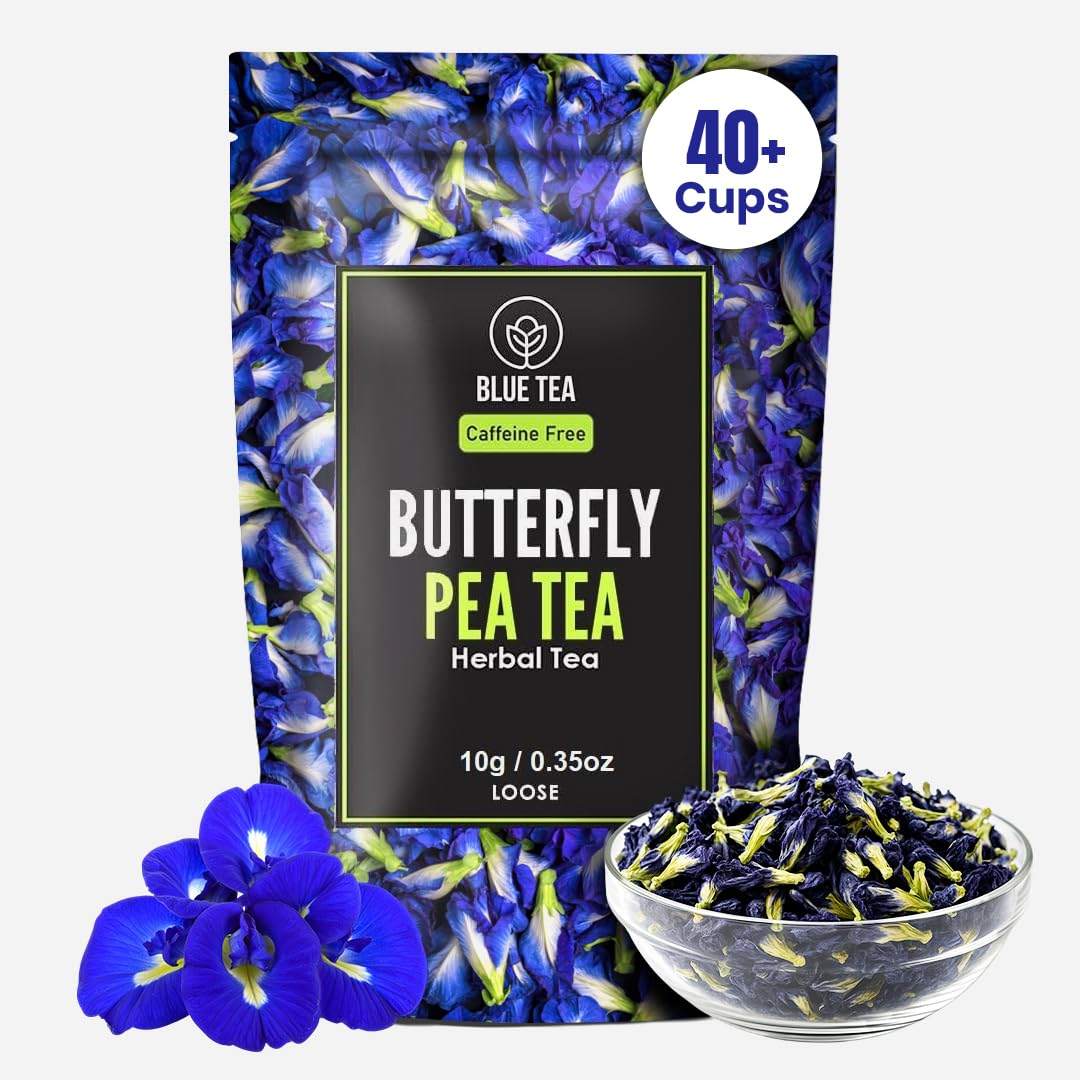
Why the Blue Tea Butterfly Pea Flower Loose Tea Holds Up
A genuinely clean, caffeine-free herbal with real antioxidant credentials — butterfly pea flower's anthocyanin content makes it more than just a pretty blue cup.
Butterfly pea flower tea has become one of the more interesting wellness ingredients to land in mainstream retail, and it's worth separating what's genuinely useful from what's aesthetic novelty. The plant — Clitoria ternatea — has been used in Ayurvedic and Southeast Asian traditional medicine for centuries, but its recent Western popularity has more to do with Instagram than ethnobotany. That's not necessarily a problem, as long as you go in with accurate expectations.
The active compounds driving most of the legitimate interest are anthocyanins, specifically ternatins — a subclass of anthocyanin unique to butterfly pea flower. These are potent antioxidants that neutralize free radicals and have demonstrated anti-inflammatory activity in cell and animal studies. Early human research has looked at potential benefits for memory and cognitive function, blood glucose modulation, and eye health, with some promising but not yet conclusive results. What the research does consistently support is that the plant is safe, well-tolerated, and meaningfully antioxidant-rich — a solid baseline for a daily herbal.
For skin-focused wellness enthusiasts, the antioxidant angle is worth noting. Systemic antioxidant intake — through diet and beverages — supports the skin's own defense mechanisms against oxidative stress, which accelerates visible aging. Butterfly pea flower won't replace a topical vitamin C serum or a broad-spectrum SPF, but as part of a broader antioxidant-rich diet, it contributes. Think of it as the internal complement to your external routine.
Blue Tea's loose-leaf format is the right way to consume this ingredient if you're after maximum compound retention. Whole dried flowers steeped in water just off the boil (around 90–95°C) for three to four minutes extract anthocyanins efficiently without degrading them through excessive heat. The resulting brew is a deep, jewel-toned blue that shifts to purple or pink with a squeeze of lemon — that color change is the anthocyanins reacting to the drop in pH, and it's a reliable visual cue that the compounds are present and active.
If you're new to butterfly pea flower tea, start with one cup daily and observe how your body responds — it's well-tolerated by most people, but as with any herbal, individual responses vary. Pair it with a slice of lemon for the pH shift and a small boost of vitamin C, or brew it cold-steeped overnight for a smoother, slightly sweeter profile. At under $6 for 40-plus cups, the barrier to experimenting is low, and the upside — a genuinely pleasant, antioxidant-delivering caffeine-free ritual — is real.