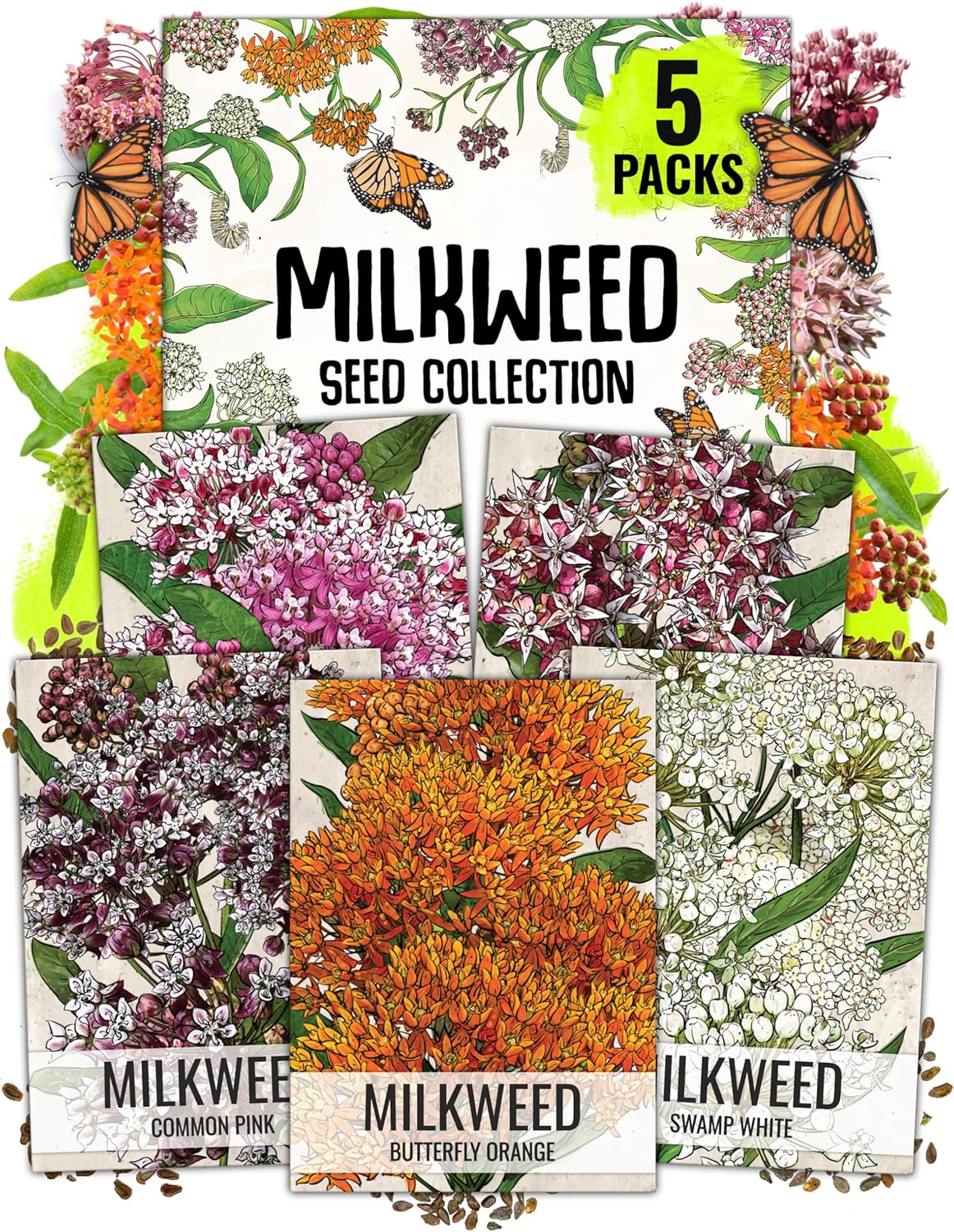
Seed Needs Milkweed Variety Pack (5 Packs): A Considered Take
Three Asclepias varieties in one order — pink, orange, and white — open-pollinated and ready to earn their place in a serious butterfly garden. A quiet investment that pays off across seasons.
Every spring I get the same question from neighbors who've watched monarchs pass through my yard: what did I plant? The answer is always milkweed, and the follow-up is always the same — where do you find it? The honest answer is that I started from seed years ago, and the plants have been quietly multiplying ever since.
Milkweed seeds rank among the most rewarding things you can direct-sow in a home garden, but they ask something of you that most annual flower seeds don't: time. The Asclepias genus — which includes the pink, orange, and white varieties in the Seed Needs collection — is perennial across much of North America, meaning the investment you make in spring of year one keeps paying dividends in year four and beyond. That's the kind of math I find compelling.
The cold stratification step is where most first-time milkweed growers stumble. Tucking damp seeds into the refrigerator for three to four weeks before planting mimics the natural freeze-thaw cycle that breaks dormancy in the wild. Skip it and germination rates drop considerably. Do it right and you'll see sprouts within two weeks of transplanting to warm soil. I use a labeled zip-lock bag and set a phone reminder — low-tech, but reliable across many seasons.
What I appreciate about a variety pack like this one is the range. Common milkweed (Asclepias syriaca) spreads aggressively and naturalizes well in open areas. Butterfly weed (Asclepias tuberosa, the orange variety) is more compact and better suited to borders. The pink swamp milkweed tolerates wetter soil near downspouts or low spots in the yard. Planting all three means you're matching plant to microclimate rather than forcing one species to perform everywhere.
If you're building a pollinator garden and searching for milkweed seeds as a starting point, this variety pack is a sound first step. Plant generously, expect modest growth in year one, and resist the urge to pull what looks like a struggling seedling. By the second summer, the roots will have done their quiet work underground, and the plants will reward that patience with blooms that bring monarchs to your yard from late June through September.