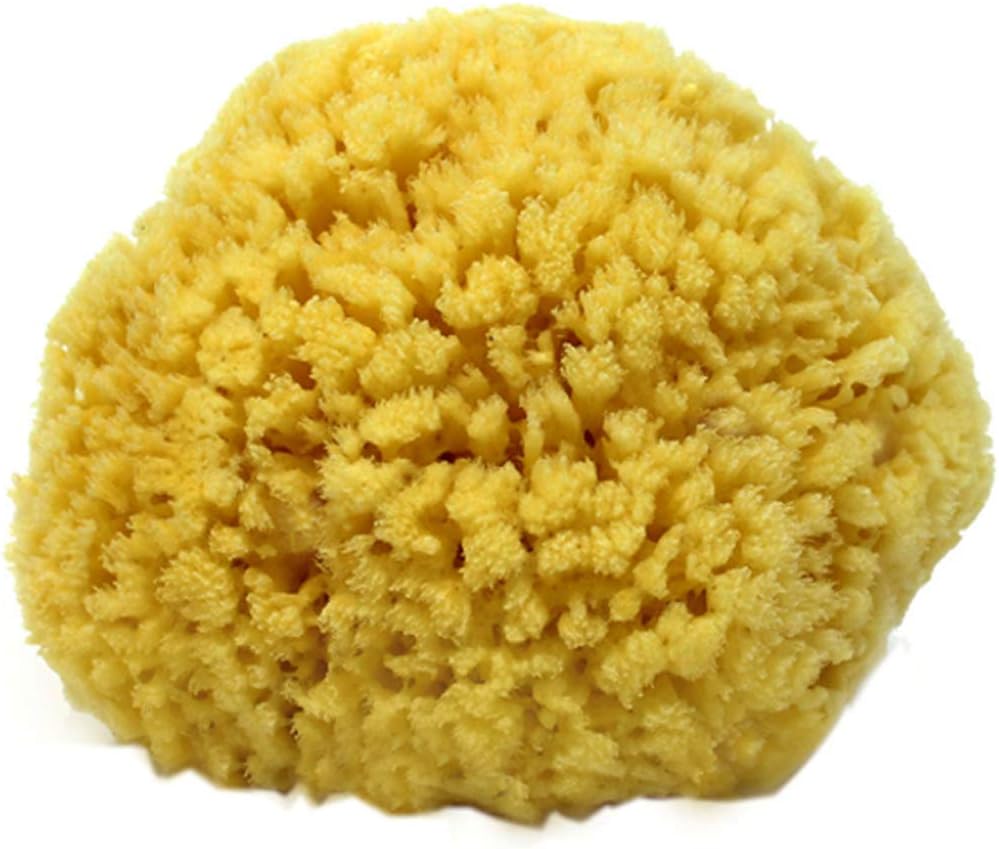
Living With the Spa Destinations Natural Sea Sponge 4–5"
A genuinely useful bath tool that earns its place through material integrity rather than marketing — the natural cellular structure of a real sea sponge does things a synthetic loofa simply cannot replicate.
If you search 'sea sponge' with any intention of actually buying one, you'll quickly notice that the category is noisier than it should be. Compressed cellulose sponges, nylon mesh puffs, and hybrid foam tools all compete for the same shelf space — and some are marketed with language that implies natural origin without delivering it. Understanding what separates a genuine sea sponge from its imitators is the first step toward making a purchase that actually serves your skin.
A real sea sponge is a living organism — or rather, the structural skeleton of one. Its pore network is three-dimensional and irregular in a way that no manufacturing process can fully replicate. That architecture is what makes it effective: water and cleanser move through the sponge in a way that creates even, low-friction lather rather than the concentrated scrubbing pressure you get from a loofah or mesh puff. For anyone managing conditions like rosacea, eczema, or post-procedure sensitivity, this mechanical gentleness is clinically relevant, not just a comfort preference.
The sustainability angle is worth examining honestly. Marine sponges do regenerate after responsible harvesting — the base left in the ocean floor regrows the sponge body over time. This makes them genuinely renewable in a way that synthetic alternatives, which are petroleum-derived, are not. However, 'natural' and 'sustainable' are not automatically synonymous; sourcing practices vary, and not all sea sponge products on the market come from well-managed fisheries. Looking for brands that are transparent about origin is a reasonable due diligence step.
Care protocol is the variable most people underestimate. A natural sea sponge that dries completely between uses can last months; one that stays damp in a closed shower caddy may degrade in weeks. The practical fix is simple: rinse the sponge thoroughly after each use, squeeze out excess water, and hang it somewhere with airflow. A periodic soak in diluted apple cider vinegar or a mild saline solution helps maintain the structure and manage microbial load without introducing harsh chemicals into a tool that contacts your skin directly.
For those building a more intentional bath and body routine, a natural sea sponge is one of the few upgrades that costs relatively little and delivers a tangible sensory and functional improvement. It pairs particularly well with gentle, pH-balanced body cleansers — the kind where even lather distribution matters — and works across skin types from oily to dry. It's not a trend product. It's a tool that has been used for centuries because the material genuinely works.