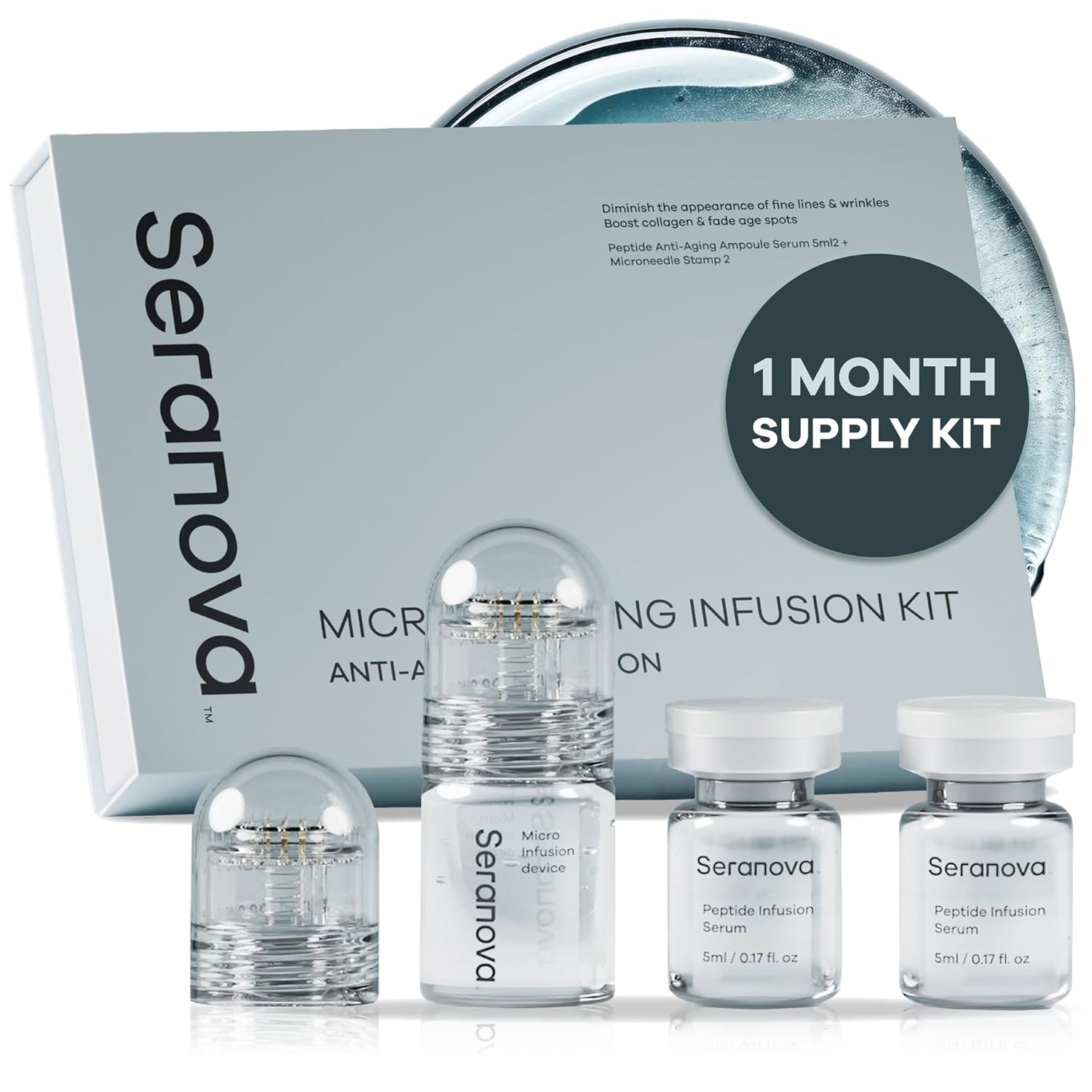
Living With the Seranova Micro Infusion Facial Serum
A hydration-forward facial serum that earns its place in a real routine — the micro infusion delivery concept adds genuine functional value beyond what a standard dropper serum can claim.
If you've been searching 'Seranova reviews' and landing on a wall of vague before-and-afters, I want to give you something more useful: a grounded look at what this serum category actually promises and how to evaluate whether it delivers for your specific skin.
Micro infusion as a concept has legitimate science behind it. The principle — using fine-tipped or pressure-based delivery to push actives below the outermost skin barrier — is the same rationale behind professional microneedling sessions. The question worth asking of any at-home product that borrows this language is: what's actually being infused, and at what depth? Topical serums, no matter how sophisticated their applicator, are still subject to skin barrier physics. That doesn't make them ineffective — it means the honest benefit is enhanced surface absorption, not true dermal penetration.
For a moisturizing essence like this one, that's actually fine. Humectants like hyaluronic acid work at the epidermal level anyway — they draw moisture into the upper layers of skin, not into the dermis. So the delivery story, while slightly overstated in marketing terms, doesn't undermine the product's actual mechanism. Where I'd push Seranova to improve is in publishing a full INCI list with percentages, or at minimum, clarifying which molecular weight of hyaluronic acid (if present) they're using. Low-molecular-weight HA penetrates more effectively; high-molecular-weight HA films and plumps at the surface. Both are useful — but they're not interchangeable, and knowing which you're getting matters.
For anyone building a routine from scratch, a moisturizing serum-essence hybrid like this fits logically between your water-based toner step and your occlusive moisturizer. Apply to damp skin to maximize humectant uptake, and follow with something that contains emollients or occlusives — a ceramide moisturizer is a reliable pairing — to seal in what the serum deposits. This layering principle applies regardless of which brand you're using, but it's especially relevant for a hydration-forward product like this one.
The one-month supply framing is something I appreciate in principle. Too many serums are sold in ambiguous sizes that make it impossible to gauge cost-per-use or track results against a consistent timeline. A defined 30-day supply creates accountability — both for the brand and for the user. Real skin improvement from a hydrating serum takes four to six weeks of daily use to show up in a way you can meaningfully assess. If you're not giving it that window, you're not evaluating the product fairly. The $79.95 monthly cost is on the higher end for a single-step hydrator, but it's not out of range for the premium serum market — provided the formula holds up to closer scrutiny on its active ingredient story.