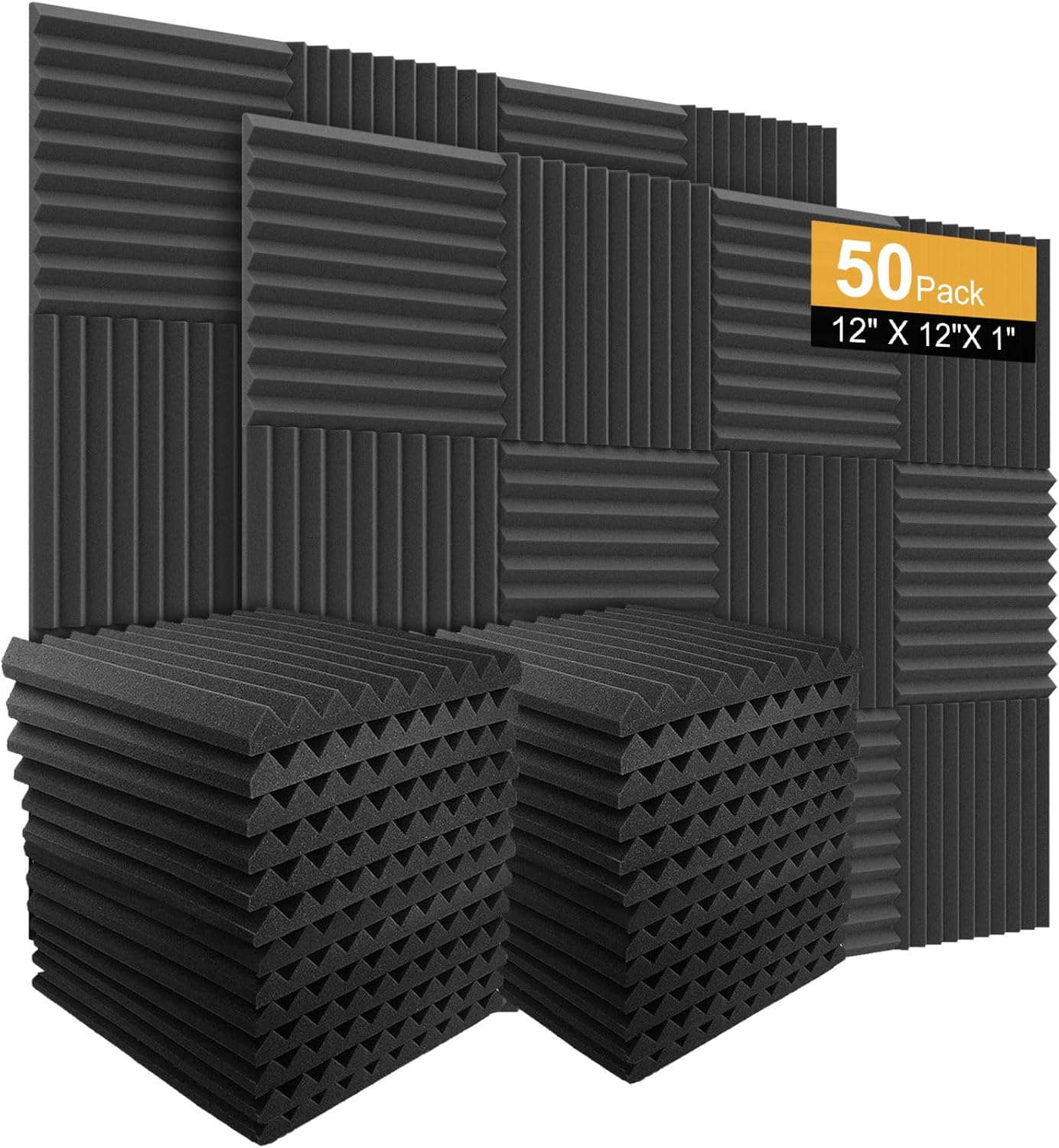
Living With the Burdurry 50-Pack Wedge Acoustic Foam Panels
Fifty panels deep and priced like a rounding error on a real studio build — the Burdurry wedges do the unglamorous work of taming flutter echo so your room stops lying to your ears.
If you've spent any real time mixing in an untreated room, you already know the tax it charges. Every decision you make — the level of a snare, the brightness of a vocal, the width of a stereo synth pad — gets filtered through a room that's adding its own character whether you invited it or not. Sound dampening panels are the least glamorous purchase in any studio setup, but they're often the one that changes what you actually hear the most.
The conversation around acoustic treatment tends to get complicated fast. Bass traps, diffusers, cloud panels, corner treatment — the physics are real and the rabbit hole is deep. But for most home recordists, the first and most impactful step is simply reducing flutter echo and early reflections in the mid-range. That's the frequency range where vocals, guitars, and most melodic content live. Untreated parallel walls in a small room will smear those frequencies in ways that make your mixes translate badly to other playback systems, and no amount of EQ will fix a problem that's baked into the recording environment itself.
Wedge-profile foam panels like the Burdurry 50-pack are the workhorses of entry-level acoustic treatment precisely because they address that problem directly and affordably. The wedge geometry isn't just visual — it creates a slightly irregular surface that scatters sound rather than reflecting it at a clean angle, which means better coverage from fewer panels. A flat foam panel absorbs what hits it head-on; a wedge panel works a wider field. In a small room, that distinction matters.
One thing worth understanding before you buy any acoustic foam is the difference between sound absorption and soundproofing. These panels — like virtually all foam panels at any price — absorb sound energy within the room. They reduce what bounces around inside your four walls. They do not stop sound from traveling through those walls to your neighbors, and they won't turn a loud practice space into a silent one. If your goal is isolation, that's a construction problem, not a foam problem. But if your goal is making recordings that sound like they were captured in a controlled space rather than a live room you didn't intend to have, treatment like this is exactly the tool.
For anyone building out a home studio, a podcast booth, or even a dedicated listening room, the Burdurry panels represent one of the better value propositions on the market right now. Fifty panels, consistent quality, and a price point that doesn't require justifying to anyone. Treat the room first. Everything else sounds better when the room gets out of the way.