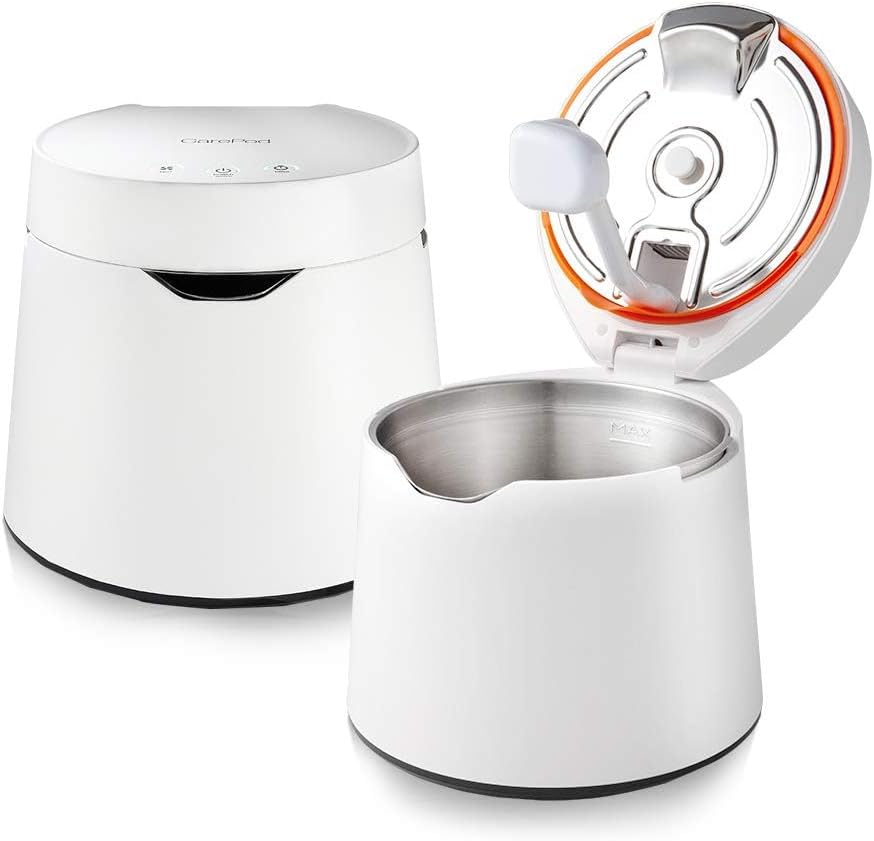
Carepod One Stainless Steel Humidifier: A Considered Take
The Carepod One earns its place in a skin-conscious routine — stainless steel internals, a filter-free design, and a genuinely easy three-part clean make it one of the more hygiene-forward humidifiers on the market.
When we talk about a solid skincare routine, we spend a lot of time on what we apply to our skin — actives, occlusives, SPF. What gets far less attention is the environment that skin is sitting in for eight hours every night. Ambient humidity has a measurable effect on transepidermal water loss (TEWL), and in dry climates or during winter heating season, indoor relative humidity can drop well below the 40–60% range that supports healthy barrier function. A humidifier isn't a luxury; for many skin types, it's infrastructure.
The problem with most humidifiers is that they introduce a new variable: microbial contamination. Plastic reservoirs with hard-to-reach corners are practically designed to harbor biofilm — a structured community of bacteria and mold that forms on wet surfaces and is notoriously resistant to casual rinsing. When a contaminated humidifier runs, it aerosolizes whatever is growing inside it. For anyone dealing with sensitive skin, rosacea, or compromised barrier function, that's a meaningful concern that most product marketing quietly sidesteps.
This is where the Carepod humidifier line makes a coherent argument. The stainless steel interior of the Carepod One isn't just an aesthetic choice — it's a material science decision. Stainless steel's non-porous surface is significantly harder for biofilm to colonize compared to the polypropylene used in most consumer humidifiers. Paired with a three-part disassembly design, it lowers the barrier to actually cleaning the unit regularly, which is the single most important maintenance behavior for any humidifier owner.
For the skincare-focused user, the practical setup recommendation is straightforward: fill with distilled or demineralized water to avoid white mineral dust, place the unit about three to four feet from the bed rather than directly adjacent, and aim to maintain bedroom humidity between 45–55%. A separate hygrometer (inexpensive, widely available) lets you dial this in precisely rather than guessing. Run it nightly through dry months and you'll likely notice a meaningful difference in morning skin texture within two to three weeks — not because the humidifier is doing anything active to your skin, but because it's stopping the environment from working against it.
The Carepod One sits at the higher end of the consumer humidifier price range, and that's a fair conversation to have. But the calculus changes when you factor in no filter replacements, a cleaning routine that takes under five minutes, and a material choice that holds up to scrutiny rather than just sounding good in a bullet point. For anyone who has cycled through cheaper units and abandoned them by February, the upgrade cost is likely worth it.